You pull up Passages at Hammock Bay on a listing site and one number stops you cold: average days on market, 317. Your first instinct is to read that as a verdict. Either the neighborhood is stuck, or the sellers there are asking too much, or something about those homes along Lake Hemingway just isn't moving. You start drafting a lowball offer before you've even seen the floor plan.
That instinct is understandable. It's also wrong, and knowing why changes how you should approach an offer in this pocket of Freeport.
The Number Nobody Explains
Passages sits along Lake Hemingway, with some homes backing to Passages Pond and others facing Lake Sunflower. It's one of many distinct sub-neighborhoods spread across the 3,000-acre Hammock Bay community, each with its own builder, its own layout, and its own small slice of resale inventory. Right now, that slice for Passages is exactly two active listings.
Two listings is not a market. It's barely a sample. When a subdivision-level average is built from a handful of homes, one listing that's been sitting for a while, whether because it's overpriced, needs updates, or the seller simply isn't in a hurry, can drag the whole average into territory that looks alarming and isn't representative of anything.
Here's the contrast that makes the point. Community-wide sales data across all of Hammock Bay's neighborhoods, as of September 2026, show homes selling in an average of about 53 days, barely above the national average of 47 to 48 days. That's a healthy, normal pace for a growing master-planned community. The 317-day figure for Passages specifically isn't a sign that buyers are avoiding that pocket. It's a sign that the sample size is too thin to tell you anything reliable on its own.
| Measure | Average days on market |
|---|---|
| Passages at Hammock Bay (subdivision level) | 317 |
| Hammock Bay community-wide (as of September 2026) | 53 |
| National average | 47 to 48 |
Why Two Listings Can Wreck an Average
Averages work the way they're supposed to when you have enough data points that outliers cancel each other out. A hundred sales in a busy subdivision will smooth over the one home that sat for eight months because of a stubborn price. Two sales can't do that. If one of those two current Passages listings has been on the market since spring while the other just hit the MLS last week, your average for the whole neighborhood becomes whatever that first listing's history says, not a reflection of buyer demand for the area.
This is the part that trips people up when they're comparing neighborhoods from a spreadsheet instead of from experience. A subdivision-level statistic feels precise because it has a number attached to it. It isn't precise. It's a snapshot of whatever inventory happens to exist at that moment, and in a small pocket like Passages, that snapshot can swing wildly from one season to the next depending on nothing more than which two or three sellers happen to be listing.
A 317-day average built from two listings tells you less about a neighborhood's health than a 53-day average built from dozens does. Sample size is the part of the story the number doesn't show you.
The Other Number That's Misleading You
Passages carries an average price of roughly $425,000. Compare that to the county-wide average of $1,611,000 and Passages looks like an extraordinary bargain, almost a quarter of what the typical Walton County home costs.
That comparison is misleading in the other direction. Walton County's average is pulled sharply upward by ultra-luxury Gulf-front product along 30A. High Pointe Resort, a gated condo community in Seacrest Beach, averages $1,608,300 with a price per square foot around $1,243, nearly double the county average per square foot. When beachfront towers like that sit in the same county-wide dataset as bay-adjacent, inland neighborhoods like Passages, the resulting average describes neither market well. It's a blended number that doesn't map to either an actual purchase decision.
The comparison that actually means something for a buyer is the one between Hammock Bay and South Walton itself. Homes inside Hammock Bay typically cost $100,000 to $200,000 less than the same square footage would run 20 minutes south, closer to the beach communities along 30A. That's a real, apples-to-apples gap driven by proximity to the coastline, not a statistical mirage built from mixing luxury condos and starter homes into one county figure.
What Passages Actually Is
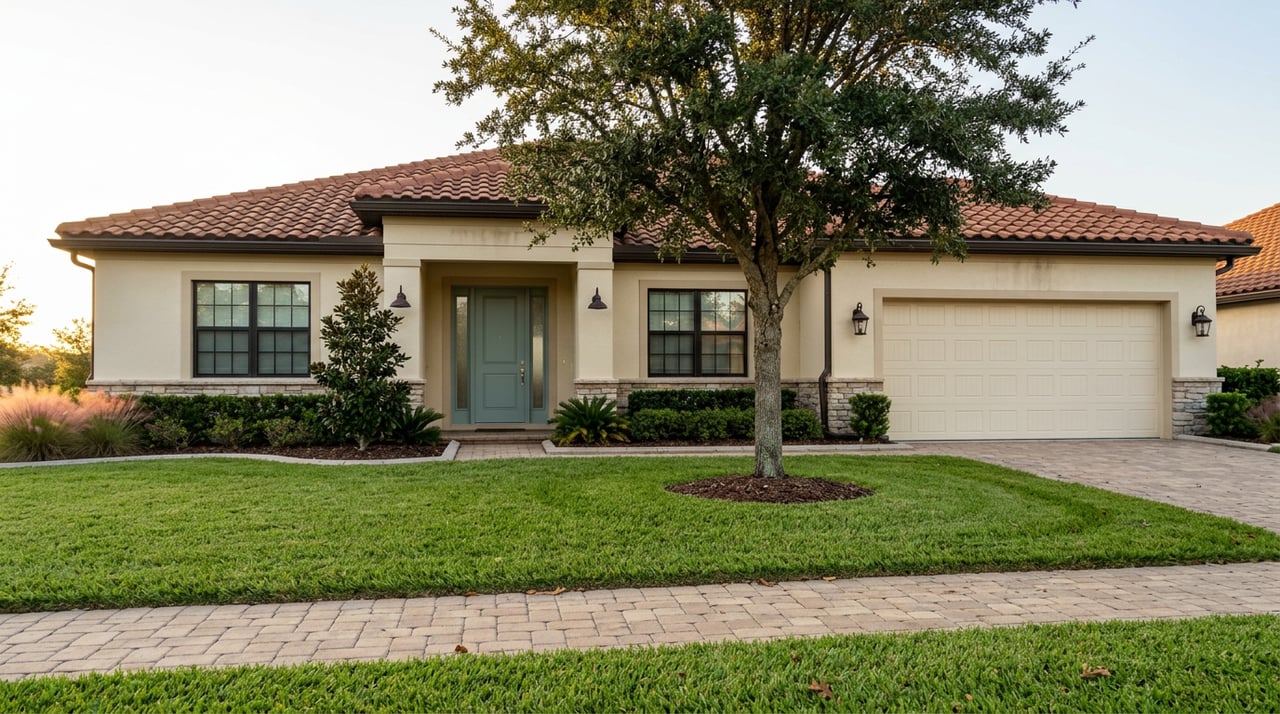
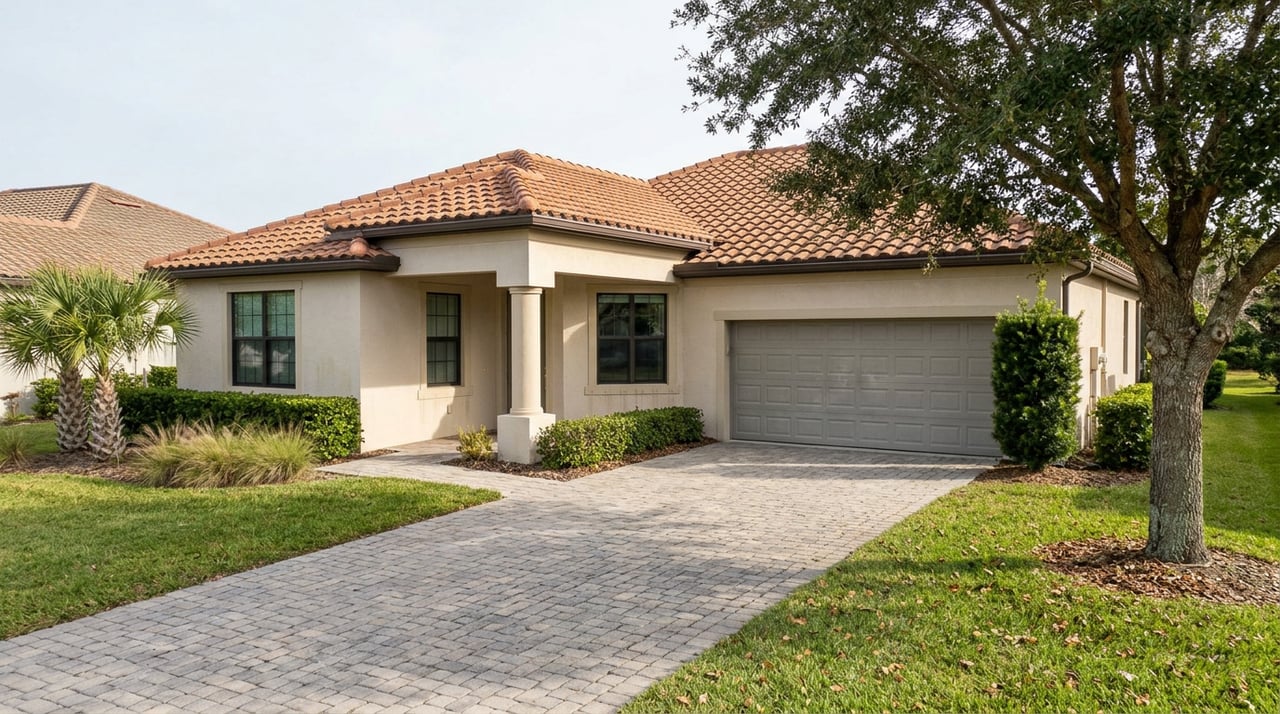
Set the numbers aside for a moment and look at what Passages offers day to day. Homes here average about 1,983 square feet, built around 2016, priced near $214 per square foot, a figure that sits well below the county average per square foot and closer to what you'd expect from an established, non-beachfront neighborhood.
Residents are a short drive from the Hammock Bay Town Center, known locally as The Windmills, home to a replica 1920s general store and brewery, an event stage, and a food truck court. The Bay Club clubhouse sits on Choctawhatchee Bay with a 500-foot dock. None of that requires living directly on the water. Passages residents get the lake views and pond frontage that give the neighborhood its name, plus easy access to everything else Hammock Bay has built out over the past two decades, all within about 15 minutes of the beaches along Scenic Highway 30A.
How This Changes Your Offer
None of this means Passages is a slam dunk or that every listing there is priced right. It means the headline statistics you'll find on a portal shouldn't set your negotiating posture before you've looked at the actual listing history.
Before writing an offer on a home in Passages, or dismissing one because of what the subdivision-level stats suggest, it's worth checking a few things directly:
- How long has this specific listing been active, and has the price changed since it went live
- What have comparable homes sold for elsewhere in Hammock Bay in the past six months, not just within Passages
- Is the seller motivated by something specific, a job relocation, a completed new build elsewhere, or are they simply testing the market
- How does the price per square foot compare to Hammock Bay's community average, not the county's
A seller whose home has sat for four months in a two-listing subdivision isn't necessarily desperate. They might just be one of only two sellers in a small, well-liked pocket where buyers are patient because they know what they're waiting for. Reading the community-wide pace instead of the subdivision-level anomaly gives you a far more accurate sense of where your offer should land.
The Takeaway
Numbers on a listing page are easy to trust because they look objective. In a small enclave like Passages at Hammock Bay, the sample behind that number is thin enough that it can mislead more than it informs. The community-wide pace, the real price gap versus South Walton, and the actual condition and history of the specific home you're considering will tell you far more than a single subdivision average ever could.
If you're weighing Passages against other pockets of Hammock Bay, or trying to figure out what a specific listing's history actually says about your negotiating room, that's exactly the kind of digging Briar Patch Realty does before a client ever writes an offer. Reach out for a Free Home Valuation and a straight read on what the numbers in any Emerald Coast neighborhood actually mean for you.